
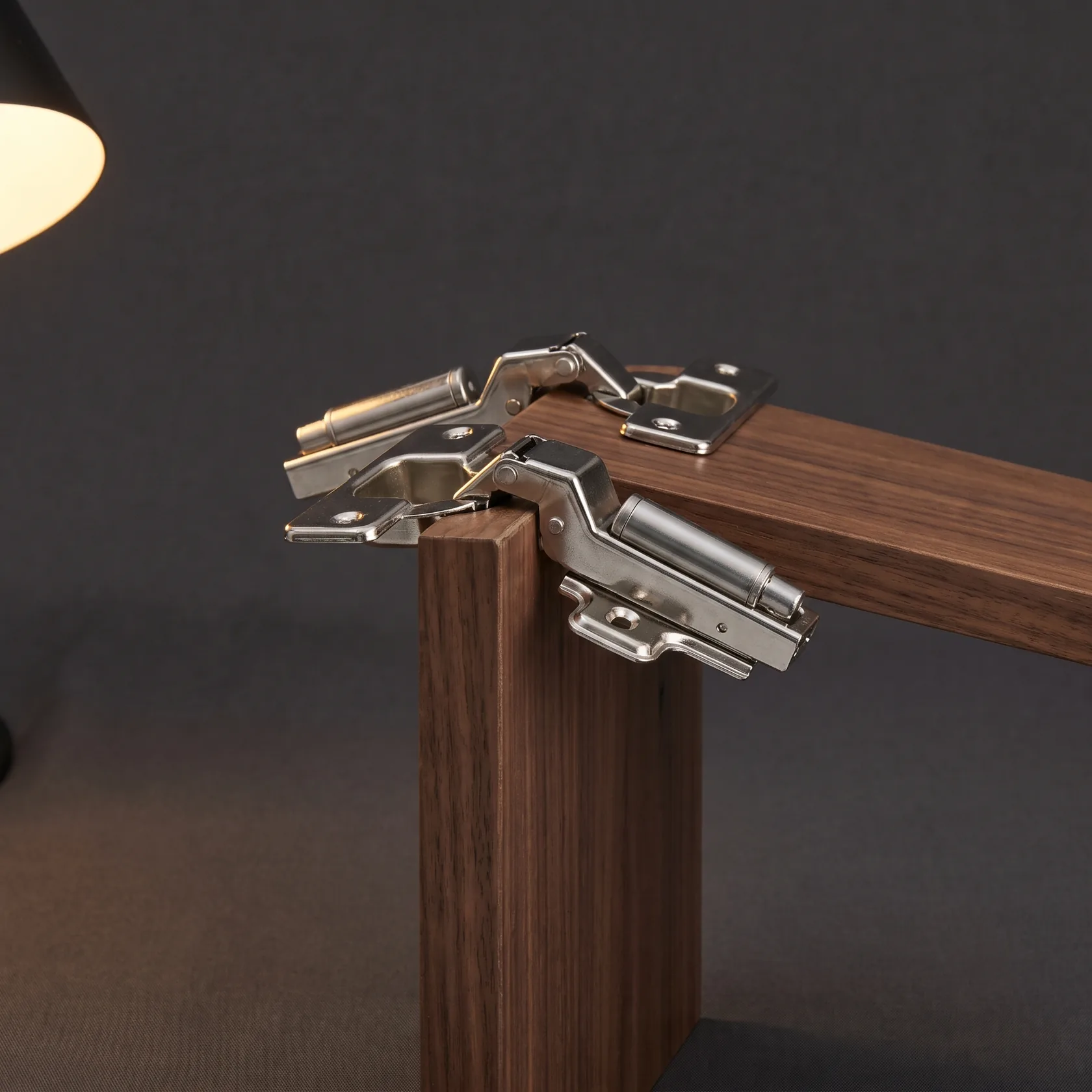
A standard cabinet hinge and a soft-close hinge look nearly identical mounted on a door, and cost only a modest amount more per unit. The difference between them shows up entirely in use, and it's worth understanding before it's buried three lines down in a bill of materials.
What the hydraulic damper actually does
A standard hinge relies on spring tension alone — the door swings closed at whatever speed the spring and the person closing it produce, which usually means a hard clash of wood on wood at the last few centimetres. A soft-close hinge adds a small hydraulic damper that engages in that same last stretch, slowing the door to a controlled, silent close regardless of how hard it was pushed.
Where the cost shows up later, not now
The extra mechanism adds a modest amount to the unit cost of the hinge itself. What it removes is a slower, harder-to-see cost: repeated hard-close impact is one of the more common reasons cabinet doors loosen, chip at the edge, or start swinging unevenly within the first year of use. On a cabinet line fielding warranty claims for door alignment, switching to soft-close on the affected SKUs is frequently cheaper over a product's service life than the marginal per-unit saving on standard hinges.
Where standard hinges still make sense
Soft-close isn't the right call everywhere. Utility and back-of-house cabinetry, budget-tier product lines competing hard on landed cost, and any application where the door is opened rarely enough that impact wear isn't a realistic risk are all reasonable places to keep a standard hinge. The decision is closer to a cost-and-positioning call than a universal upgrade.
What to check before switching a line
Soft-close hinges are typically a few millimetres deeper than standard hinges of the same opening angle, which can affect clearance on shallow cabinets or doors close to an adjacent wall. Confirming the opening angle and door thickness against the hinge's spec sheet before a full production run avoids a fit problem discovered after the doors are already cut.
Comparing options for an upcoming cabinet run? We can send both standard and soft-close samples in the exact finish and opening angle you're specifying.