
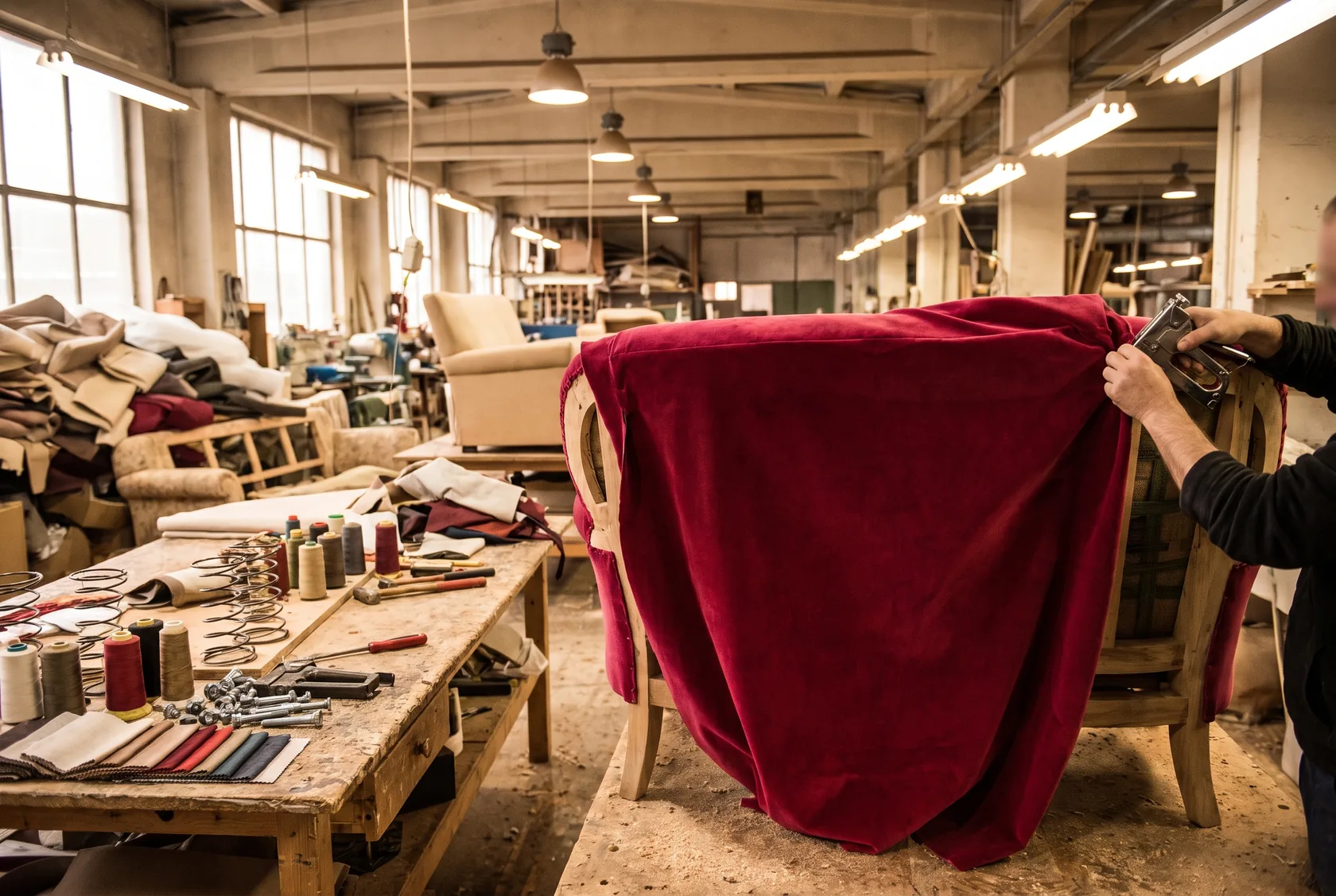
Split a sofa order into its two main inputs and you get a cover fabric and a set of mechanisms, connectors and legs underneath it. Traditionally, those come from two different kinds of supplier — a textile trading company for the fabric, a hardware or fitting supplier for everything else. That split has been standard for long enough that most buyers don't question it. It's worth questioning.
Two suppliers means two of everything
Two lead times to track, two sets of samples to approve, two inspection reports to reconcile, and two shipping schedules to align before a production run can start. When one supplier runs a week behind, the other party's on-time material sits in a warehouse waiting for it. None of these problems are large individually. Stacked across a full purchase order, they add real days to a production calendar.
Where it actually costs money
The clearest cost shows up at the container stage. If fabric and hardware ship separately, they either travel as two partial shipments — each absorbing its own share of fixed freight and documentation cost — or one waits for the other, tying up warehouse space and delaying the cutting line. Consolidating both into one shipment from one supplier removes that coordination cost entirely; it isn't a discount, it's a delay and a duplicate freight line that simply doesn't happen.

Where it costs quality control
A fabric inspector and a hardware inspector, from two separate companies, are checking against two separate checklists, written by two separate teams. If a defect shows up at the seam between fabric and fitting — a hinge that doesn't sit flush once the fabric is stretched over the frame, for instance — there's no single party positioned to have caught it earlier, because no single party was looking at both.
What "one supplier" actually changes
It doesn't mean giving up choice — a combined sourcing desk can still shop fabric and hardware separately across mills and only bring them together at the quotation and shipping stage. What changes is who owns the coordination: one written specification, one QC checklist covering both categories, and one export shipment with one set of customs documents. The buyer's production planner deals with a single point of contact instead of reconciling two.
Specifying both categories for a current project? Send us the fabric and hardware you have in mind and we'll quote them together, on one timeline.