
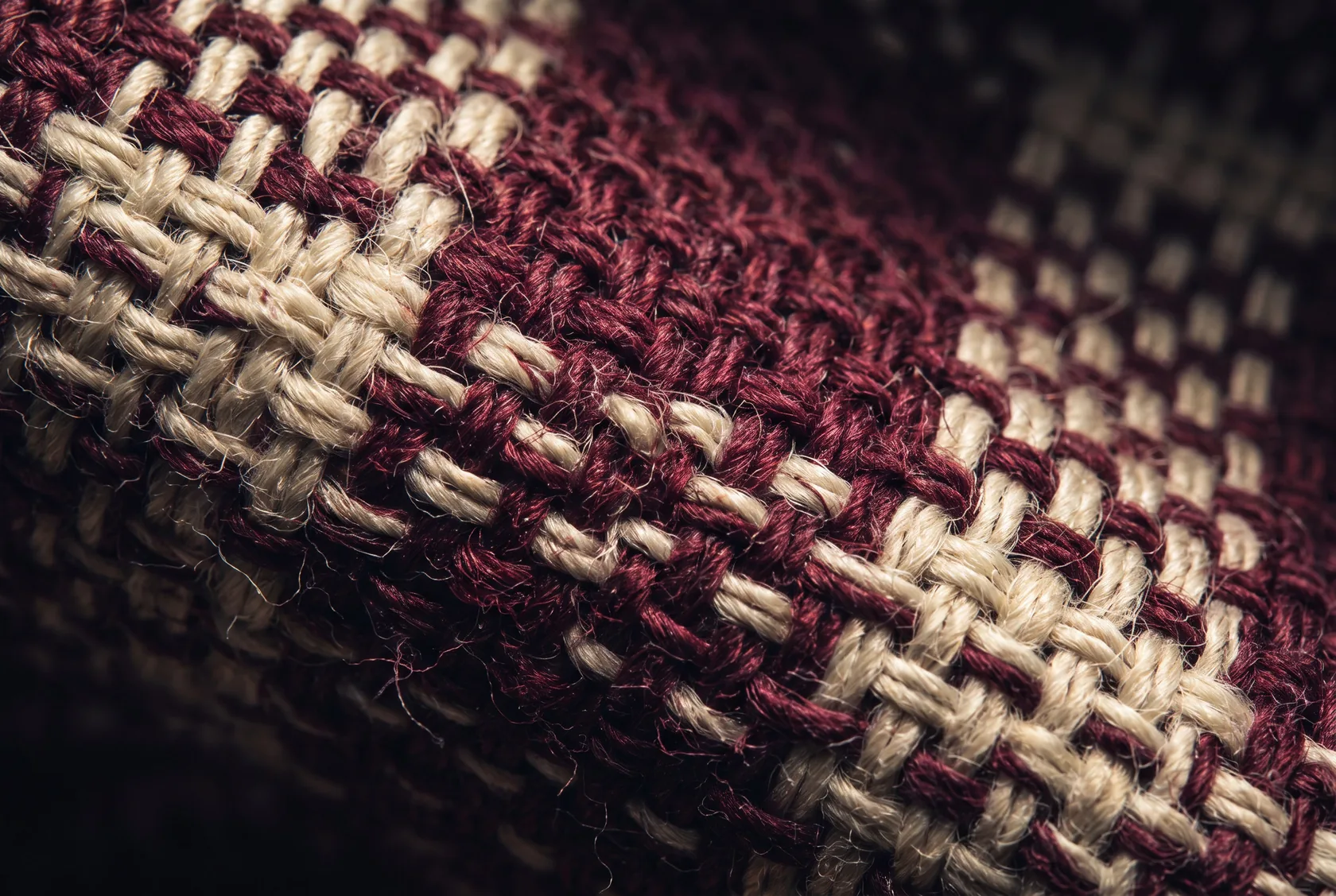
A fabric quotation usually arrives with four or five numbers attached to it — composition, GSM, width, rub count — and very little explanation of what any of them mean for the finished piece of furniture. For a buyer who isn't a textile engineer, that shorthand is easy to skim past and hard to compare across suppliers. Here's what each figure is actually telling you.
Composition: what the fabric is made of
Composition lists the fibre content as a percentage — "100% polyester" or "poly-cotton blend," for example. It matters for three practical reasons: how the fabric feels, how it wears, and how it's cleaned. A polyester upholstery fabric will generally resist fading and stretching better than a natural-fibre blend, which is why most volume sofa production leans polyester or polyester-blend rather than pure cotton or linen.
GSM: the weight, not the quality
GSM stands for grams per square metre — a direct measure of how much the fabric weighs. A 240 GSM velvet is lighter than a 380 GSM chenille, and that difference shows up in drape, hand-feel and how much the fabric costs to ship. GSM on its own doesn't tell you whether a fabric is durable; a thin, tightly woven fabric can outlast a heavier, loosely woven one. It's a useful number for comparing two similar fabrics, less useful for comparing across very different weave types.
Rub count: the number that predicts wear
Rub count — most commonly reported as a Martindale figure — estimates how many rubbing cycles a fabric can withstand in lab testing before visible wear appears. As a rough guide, fabric rated below 15,000 rubs suits light, occasional use; 15,000–25,000 suits general residential seating; above 30,000 is considered suitable for heavier residential or light commercial use. It's the single number most worth asking for when a fabric is going into a high-traffic piece.
Width: the number that decides your yield
Most upholstery fabric ships at a standard width, commonly around 140 cm, though this varies by collection. Width determines how many pattern pieces you can cut per metre and directly affects your material cost per unit — a detail worth confirming before a large cutting plan is finalised, not after.
Reading the sheet as a whole
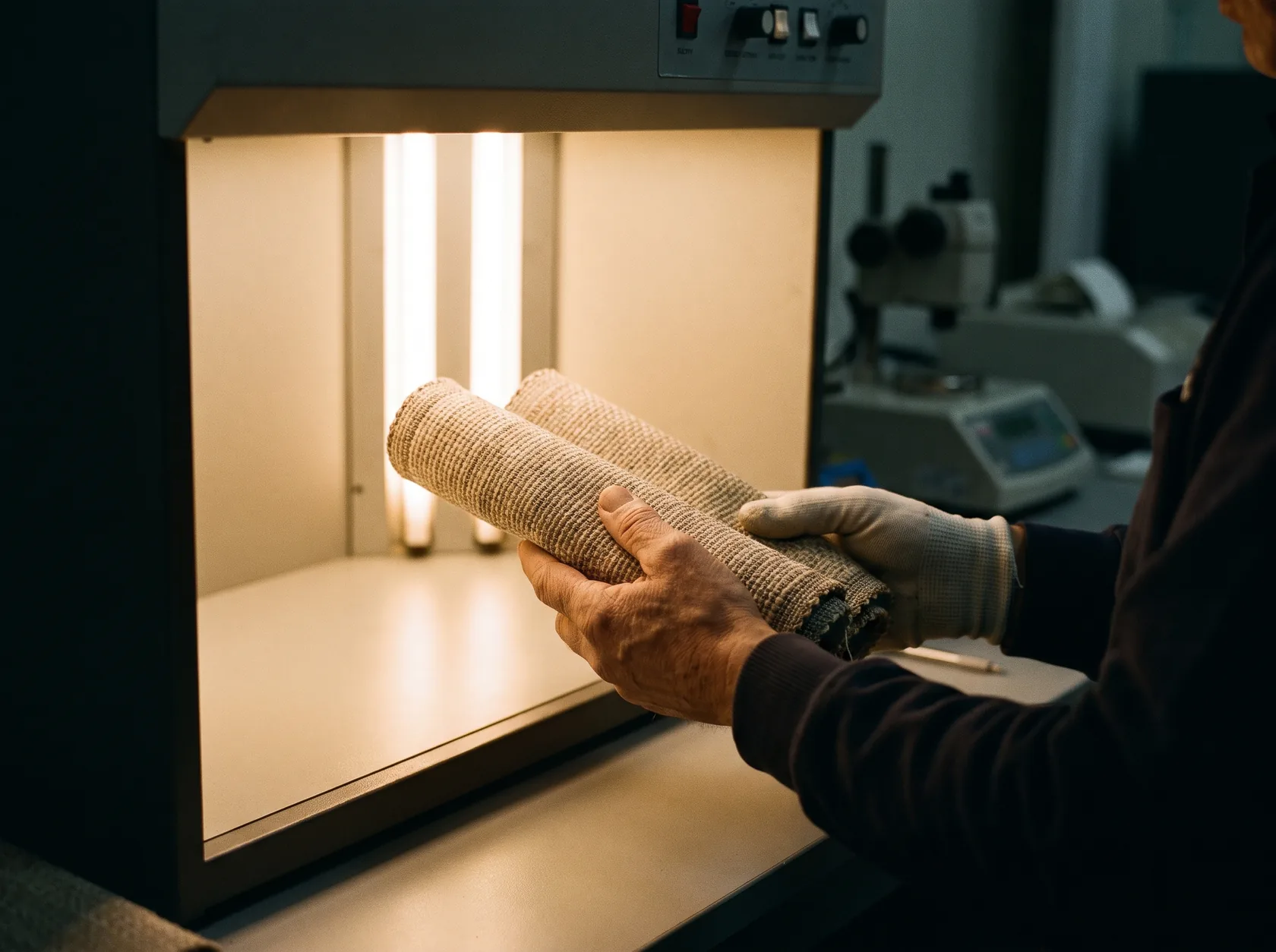
None of these numbers is meaningful in isolation. A high rub count on a fabric that's the wrong weight for your frame, or the wrong composition for your care instructions, doesn't solve the problem it looks like it solves. The specification is a starting point for a conversation, not a substitute for a physical swatch in your hands — which is why every collection in our catalog ships as a sample before a production quantity is confirmed.
Have a spec sheet from another supplier you'd like matched or compared? Send it to our sourcing desk and we'll quote an equivalent from the current collection.